
Flood Insurance Waiting Period: How to Avoid Gaps Before Storms Hit
Understand the flood insurance waiting period before disaster strikes. Learn the 30-day NFIP waiting period and critical NFIP guidelines to protect your home.
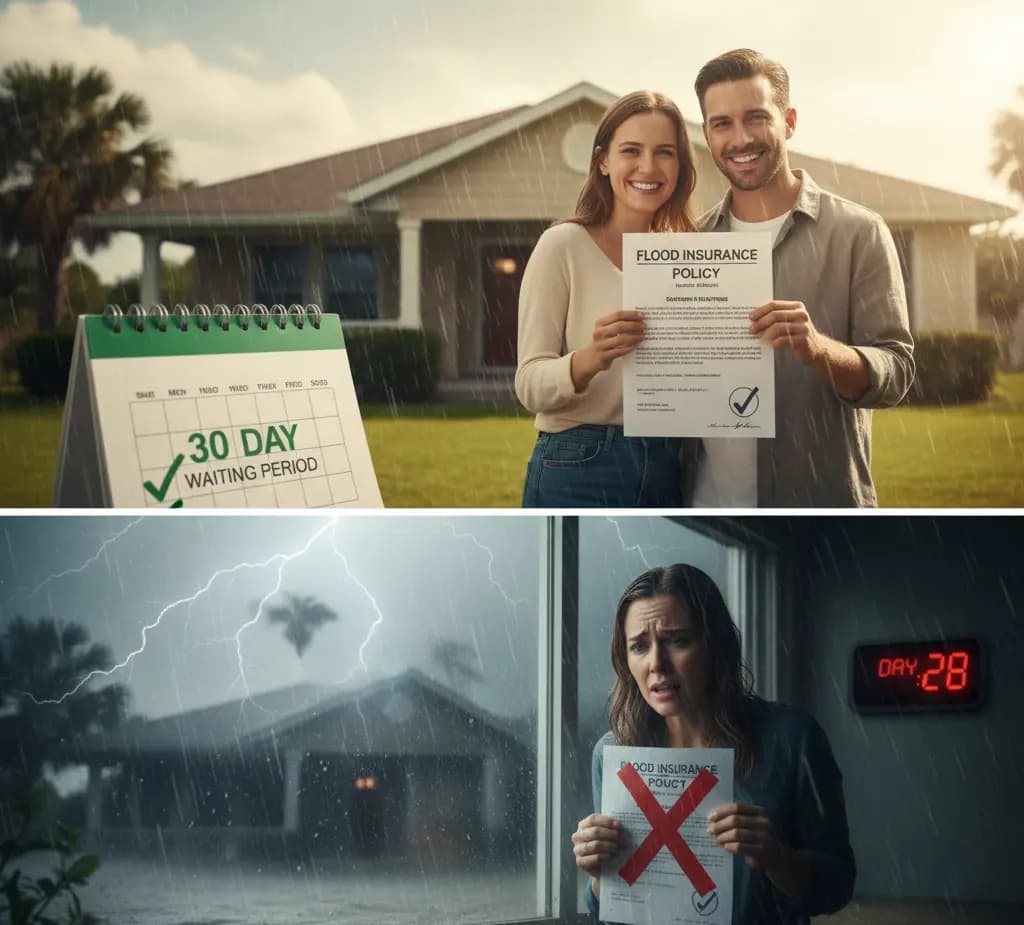
Floods are the most common and economically costly natural disasters in the United States. Surprisingly, however, property owners often believe they're covered from the impact of floods as soon as they buy a flood insurance policy. The fact is, however, that flood insurance policies, particularly those under the NFIP, have a waiting period (typically of 30 days) before coverage begins.
Without understanding this waiting period, homeowners are left unsuspecting, particularly during hurricane season or rainfall events. However, by buying coverage long before prospective storms roll in, you can prevent these gaps and have your property completely covered. In this guide, we'll dissect how the NFIP waiting period operates, the rule exceptions, and practical tips to ensure you're never caught off guard when floodwaters rise.
What Is the Flood Insurance Waiting Period?
The waiting period for flood insurance is a prebuilt cushion of protection that safeguards property owners as well as insurers. When you buy a policy through the National Flood Insurance Program (NFIP), there's usually a 30-day waiting period before coverage is in effect. If a flood happens within the waiting period, your policy will not pay out for the damages.
Why is there a waiting period? The primary purpose is to avoid last-minute "panic purchases" when a storm is heading towards your area. Picture thousands of property owners purchasing coverage mere hours before a hurricane strikes. Many property insurers will issue a moratorium on any new policies or increases in coverage when there is a tropical storm, hurricane or other catastrophic event imminent. The NFIP doesn’t use a moratorium, but by having a waiting period, the NFIP keeps the financial integrity of the program intact while pushing homeowners to plan rather than act at the last minute.
NFIP Waiting Period Explained
Under NFIP guidelines, the standard flood insurance waiting period is 30 days, but there are some important exceptions where coverage can begin sooner. Understanding these exceptions can be a lifesaver if you’re buying a new property or refinancing.
- New loans or refinanced mortgage closings: When your lender requires flood insurance as a condition of a new loan or refinancing a mortgage, the NFIP permits the policy to go into effect at the time of the loan closing, allowing the lender and property owner to have protection immediately upon closing the transaction.
- Newly mapped to Special Flood Hazard Areas (SFHAs): When FEMA updates its Flood Insurance Rate Maps (FIRMs), some properties may be reclassified to be within an SFHA. In such situations, to help lenders and property owners maintain compliance with mandatory purchase requirements the NFIP offers coverage to become effective after a 1-day waiting period during the first 13 months following a map revision.
NFIP Guidelines Every Property Owner Should Know
The National Flood Insurance Program (NFIP) is meant to provide a straightforward, federally insured method for property owners to insure their property against flood loss. Yet, it's key to know the details of what the coverage entails:
- Building coverage: NFIP insurance covers the physical structure of your home, comprising the foundation, walls, electrical and plumbing systems, HVAC units, and so on.
- Contents coverage: In addition to the building, NFIP also provides coverage for personal items within the house. Electronics, appliances, furniture, clothing, and other personal property.
- Limits of coverage: NFIP policies cover a standard of up to $250,000 for the structure and $100,000 for personal property for single and 2 to 4 family residential buildings and their contents.
- Exclusions: NFIP policies exclude coverage for certain items or damages. Please review the policy carefully to understand what is or isn’t covered.
Why the Waiting Period Matters Before Storms
Many property owners assume that purchasing a policy as soon as a storm is forecasted will shield them from damage. Still, under NFIP rules, there’s usually a 30-day waiting period before coverage takes effect. The waiting period exists to prevent last-minute purchases that could overwhelm the system, but it also means property owners need to be proactive. By obtaining flood coverage before storm season (or whenever during the year if you live in a high-risk zone), you ensure you're truly insured when disaster strikes. Waiting until the storm arrives might leave you vulnerable, making what can be a safety net into an expensive risk.
How to Avoid Coverage Gaps
The most crucial and first step to prevent gaps in flood insurance coverage is purchasing early. Don't wait until hurricane season comes around or a storm has been predicted. Locking in your policy ahead of time guarantees that the 30-day NFIP waiting period has been met, your coverage is in effect, and your property is adequately covered.
Knowing if your property or business is in a Special Flood Hazard Area (SFHA) lets you expect both your risk of flood and potential insurance needs. Flood maps can be revised, so although your property may not have been located in an SFHA before, changes could impact your coverage needs.
Another alternative is looking at private flood insurance. In contrast to NFIP policies, several private flood insurance providers offer shorter waiting times, including some that are as short as 7 days. That's a lifesaver if you live in a high-risk zone or if flood season is looming on the horizon.
By acting early, being educated, looking into private flood policies, and working with experts, you can protect your home, valuables, and finances.
Common Myths About Flood Insurance Waiting Period
There are a few common misconceptions about the flood insurance waiting period that can catch property owners off guard, and they’re worth addressing so you’re not left unprotected.
First, the assumption that "I'll be covered immediately if I purchase" is sadly incorrect. NFIP policies typically have a 30-day waiting period before they become effective. That means if you buy a policy today and tomorrow a storm comes through, any flood damage that results won't be covered.
One myth is that "only coastal properties require flood insurance." Sure, coastlines are vulnerable to storm surge and hurricanes, but inland flooding poses a significant threat, too. Flash floods, heavy rainstorms, overflowing rivers, and inadequate urban drainage can result in enormous damage to houses well away from the coast. Even properties hundreds of miles inland can be devastated by floods.
Finally, many property owners assume “homeowners' or commercial insurance covers floods.” This is a costly misunderstanding. Standard homeowners' and commercial insurance policies typically exclude coverage for flood damage, including water from heavy rain, storm surge, or overflowing rivers. A separate flood insurance policy (either through NFIP or a private insurer) is required to ensure your property and belongings are protected.
Expert Tips for Property Owners
These are some expert advice every property owner must adhere to to remain safe from the danger of flood and the delays of the NFIP waiting period:
- Keep your records current: Keep your insurance company aware of any renovations, additions, or new structures on your property. Current records protect your property by ensuring that your coverage reflects the actual worth and state of your property, which can be a massive help if you have to file a claim following a flood.
- Don’t wait for storm alerts: One of the most common mistakes property owners make is waiting until a hurricane or storm is on the horizon to buy flood insurance. Because of the standard 30-day NFIP waiting period, this approach can leave you completely exposed.
- Compare NFIP and private policies: While NFIP policies provide standardized federal coverage, private flood insurance can offer more flexibility, higher coverage limits, and, in some cases, shorter or no waiting periods.
- Use planning as your best defense: Floods can be sudden and costly. By taking a proactive approach to updating records, purchasing insurance early, and exploring policy options, you minimize the likelihood of gaps in coverage.
FAQs
1). How long is the NFIP flood insurance waiting period?
2). Can I get flood insurance coverage immediately if a storm is approaching?
3). Why does the NFIP have a waiting period for flood insurance?
4). Are there alternatives to the waiting period?
5). Does the waiting period affect both building and contents coverage?
Conclusion
Understanding NFIP regulations and the 30-day waiting period allows you to prepare wisely and not be left unprotected when a flood disaster happens. By closely monitoring FEMA flood maps and understanding whether your property lies within a Special Flood Hazard Area (SFHA), you can confidently determine coverage requirements. Buying flood insurance several months ahead of hurricane or heavy rain season allows your policy to be in force and ready to cover your property, contents, and finances when a flood event happens.
Should you be seeking personalized guidance, our team of professionals at Advantage Flood can help you navigate NFIP and private flood insurance policies, compare coverage options, and ensure you're fully covered before storm season arrives.