Water Damage vs. Flood Damage: Insurance Differences You Must Know
Does house insurance cover flooding? Learn the key differences in flood vs water damage coverage so you aren't left unprotected during the 2026 storm season.
Water Damage vs. Flood Damage: Insurance Differences You Must Know
If your home suffers water damage, one of the first questions you’ll ask is: Am I covered? Unfortunately, the answer isn’t always straightforward. Many homeowners confuse water damage and flood damage, assuming they’re treated the same by insurance companies. But in the insurance world, these terms have very different meanings, and those differences can determine whether or not your claim is paid.
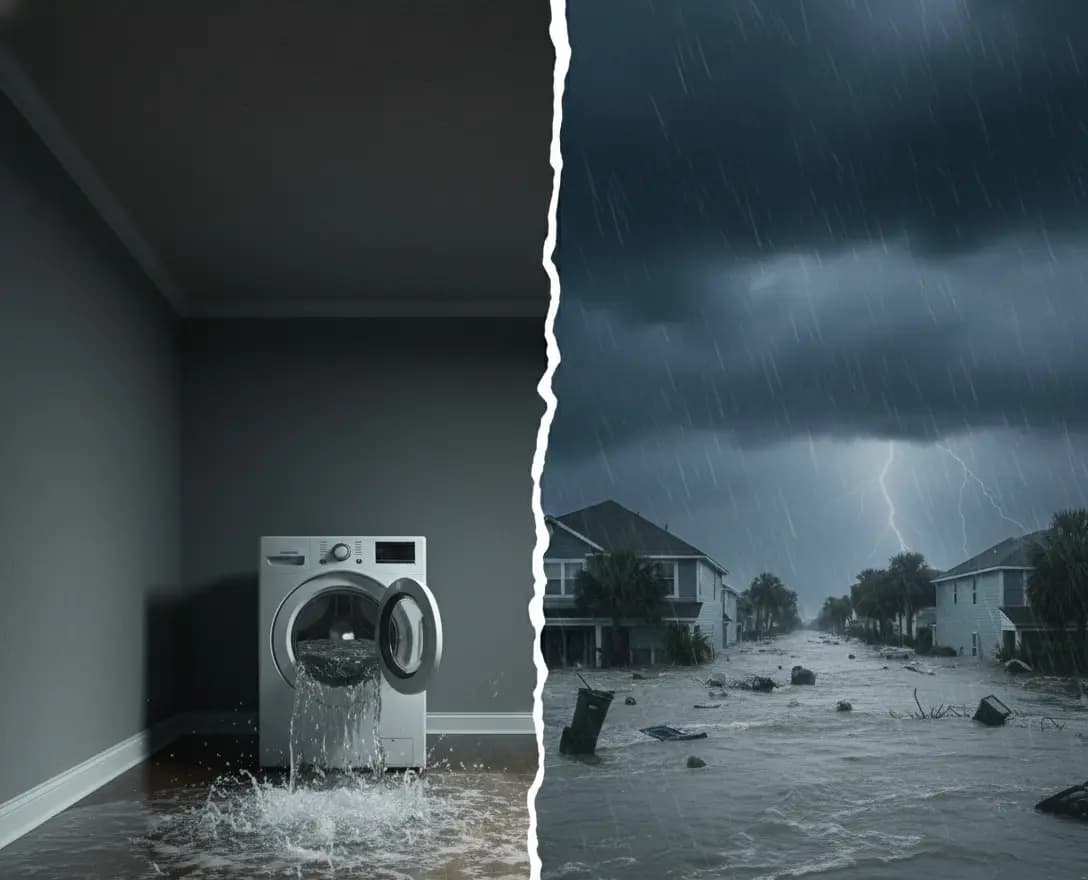
Why does this distinction matter? Because a burst pipe inside your home may be covered under your homeowners' insurance, while several inches of water from a heavy storm likely won’t be. Understanding the differences between flood and water damage is crucial for ensuring your home has adequate protection and avoiding unexpected out-of-pocket costs.
Does Homeowners Insurance Cover Flooding?
One of the most frequently asked questions is: Does homeowners' insurance cover flood damage? The answer is no. Regular homeowners' insurance policies typically exclude coverage for flood damage. If water enters your home due to swelling rivers, storm surge, or heavy rain accumulating on the ground and flowing in, your homeowners' insurance won't cover it.
So, what water damage coverage exists under homeowners' insurance?
- Burst pipes: If a pipe bursts unexpectedly and damages your walls, floors, or furniture, this is usually covered.
- Appliance failures: If your washing machine or dishwasher overflows, homeowners' insurance will usually cover the damage caused.
- Roof leaks: If rainwater enters through roof damage, the resulting repairs and cleanup could be covered.
However, if rising water enters your house from external sources, that's typically considered flood damage, and your standard homeowners policy won’t cover it. To stay protected, you'll need a separate flood insurance policy.
Water Damage and Flood Damage
Let's understand the definitions of water damage and flood damage according to insurance carriers:
Water damage: Instances of water damage include:
- A broken pipe is spraying water through your ceiling.
- An overflowing water heater.
- A washing machine hose failure.
- Flood damage: According to FEMA, flood is defined as a general and temporary condition of partial or complete inundation of two or more acres of normally dry land or two or more properties (one of which is yours) from:
- Overflow of inland or tidal waters;
- Unusual and rapid accumulation or runoff of surface waters from any source (overflowing rivers or creeks, heavy rainfall, blocked drainage systems, etc.);
- Mudflow.
Why the Difference Matters for Your Insurance Claim
When you make a claim, your insurer scrutinizes the origin of the water. That origin dictates coverage.
Here are two actual scenarios:
- Burst pipe in your kitchen: If a frozen pipe bursts and floods your kitchen, homeowners' insurance typically pays for the cleanup, repairs, and damaged belongings. That’s considered water damage.
- Storm surge from a hurricane: If ocean water floods your living room during a storm, that’s considered flood damage. Without a flood insurance policy, you’ll be responsible for all costs to repair or replace damaged proeprty.
This is the difference between receiving thousands of dollars in claims payments versus paying $25,000 or more out-of-pocket for damage (the average cost for one inch of flooding, as per FEMA).
The Role of Flood Insurance
As regular homeowners' insurance does not pay for damages from flooding, flood insurance is the only means available to protect against flood damage. Here's what you should know:
- National Flood Insurance Program (NFIP): FEMA is responsible for the NFIP, which offers flood insurance to homeowners, renters, and businesses in communities that participate in the program. For homeowners the NFIP offers two types of coverage:
- Building coverage: Covers the building, including foundation, walls, HVAC, plumbing and electrical systems, appliances and other built-in items (up to $250,000).
- Contents coverage: Insures personal property such as furniture, clothing, and electronics (up to $100,000).
- Private flood insurance: Certain private flood insurance providers offer alternative flood coverage options with greater limits, a wider range of coverage, and shorter waiting period, some as low as 7 days.
Common Scenarios Explained
Let's look at some everyday situations and also their treatment when it comes to insurance:
- Heavy rains create a general condition of flooding entering your home and flooding your basement: This is considered flood damage, and you’ll need flood insurance.
- Your washing machine overflows: This constitutes water damage from an internal source. Homeowners insurance usually covers it.
- Sewer backup in your home: Standard homeowners insurance may or may not cover this, some insurance companies offer optional add-ons for sewer or sump pump backups.
- Hurricane storm surge creates a general condition of flooding and enters your home: This would be classified as flood damage and is covered only if you have a flood policy.
These examples highlight why it’s so important to review your policies, coverages and ensure you’re protected from both risks.
What Flood Insurance Does NOT Cover
While flood insurance is a critical safety net, it’s equally important to know what flood insurance covers, as well as what it doesn’t. Many homeowners are surprised to learn that certain items and situations are generally excluded.
How to Protect Your Home from Both Risks
Since water damage and flood damage are handled very differently by insurers, protecting your home means planning for both scenarios. A leaky pipe and a rising river may both leave you with soaked floors, but the coverage solutions are worlds apart. Here’s how you can build a more complete safety net:
1. Read your homeowners policy carefully
Don't presume your regular homeowners' policy insures all water-related disasters. Read the exclusions, limits of coverage, and optional add-ons provided by your insurer. For instance, most policies let you add sewer and drain backup coverage that covers you against water damage from clogged pipes or a sump pump failure. This can be a godsend for urban areas or older homes with older infrastructure.
2. Look up FEMA flood maps
Flood risk is not always transparent. Your house might seem a reasonable distance away from the ocean or a river, but FEMA flood maps tell a different story. Check using the FEMA Flood Map Service Center (FEMA Flood Map Service Center | Search By Address) to determine if your property is located in a Special Flood Hazard Area (SFHA). If it is, you would be required by your lender to have flood insurance if you have a federally backed mortgage. Even if you're in a moderate to low-risk area, understanding your risk profile enables you to make more informed decisions regarding coverage.
3. Get flood insurance
Standard homeowners' insurance does not protect against flooding. You'll need to purchase a separate flood insurance policy. A common choice is the National Flood Insurance Program (NFIP), but you can get higher coverage levels, more exhaustive coverage, or shorter waiting times from private flood insurance providers. And remember this: According to FEMA statistics, almost 30% of flood insurance claims are from outside the Special Flood Hazard Areas (SFHAs), so you don't have to be in a high-risk flood zone to be at risk.
4. Keep your plumbing systems in order
Bursting pipes, broken water heaters, and overflowing appliances are the top reasons for insurance claims. Perform regular plumbing checks, replace old water heaters before they burst, and monitor connections to dishwashers, washing machines, and refrigerators. These precautions can spare you a huge (and messy) insurance nightmare.
5. Adopt a dual-protection mindset
Consider your water damage coverage as a two-layer protection:
- Layer 1: Homeowners insurance: This type of insurance protects you from sudden damage inside your home, like broken pipes or appliances that leak.
- Layer 2: Flood insurance protects you from rising water coming in from the outside, whether it's from a storm surge, heavy rain, or an overflowing river.
By installing both layers, you'll never have to wonder "Am I covered?" when disaster strikes. You'll have the peace of mind knowing you've taken care of both the mundane accidents within your home and the larger, more unpredictable flood threats from outside.
FAQs
1). Does homeowners insurance cover flood damage?
2). How are water damage and flood damage different?
3). If there's heavy rain that floods my basement, am I protected?
4). Can tenants buy flood insurance?
5). Why is FEMA's definition of "flood" significant for insurance claims?
Conclusion
When it comes to insurance, water damage and flood damage are not the same thing. Flood insurance is needed to protect against flood damage from storm surges, overflowing rivers, and heavy rain. In contrast, homeowners' insurance is meant to cover sudden, internal water damage, like broken pipes or leaks from appliances.
Relying just on your homeowners' policy can leave a significant gap in protection. And since floods are the most common and costly natural disaster in the U.S., that’s a risk few homeowners can afford to take.
The bottom line:
- Check your homeowners' insurance to understand precisely what it covers.
- Check your property's FEMA flood zone designation.
- Add flood coverage (NFIP or private) for protection against flooding.
Knowing the difference between flood and water damage will help you file claims correctly, avoid unpleasant surprises, and, most importantly, keep your home and finances safe no matter where the water comes from.
Advantage Flood can help you review your current policy, advise you on your flood zone, and compare NFIP with private flood insurance coverage if you're unsure where to start. Don't wait until the water is at your door; call us today to make sure your coverage is in place before the next storm.