
Flood Insurance Rate Map (FIRM): Complete Guide to FEMA's FIRMs
Understand FEMA Flood Insurance Rate Maps (FIRM), how they work, flood zones, and why FEMA flood insurance rate maps matter for coverage and risk
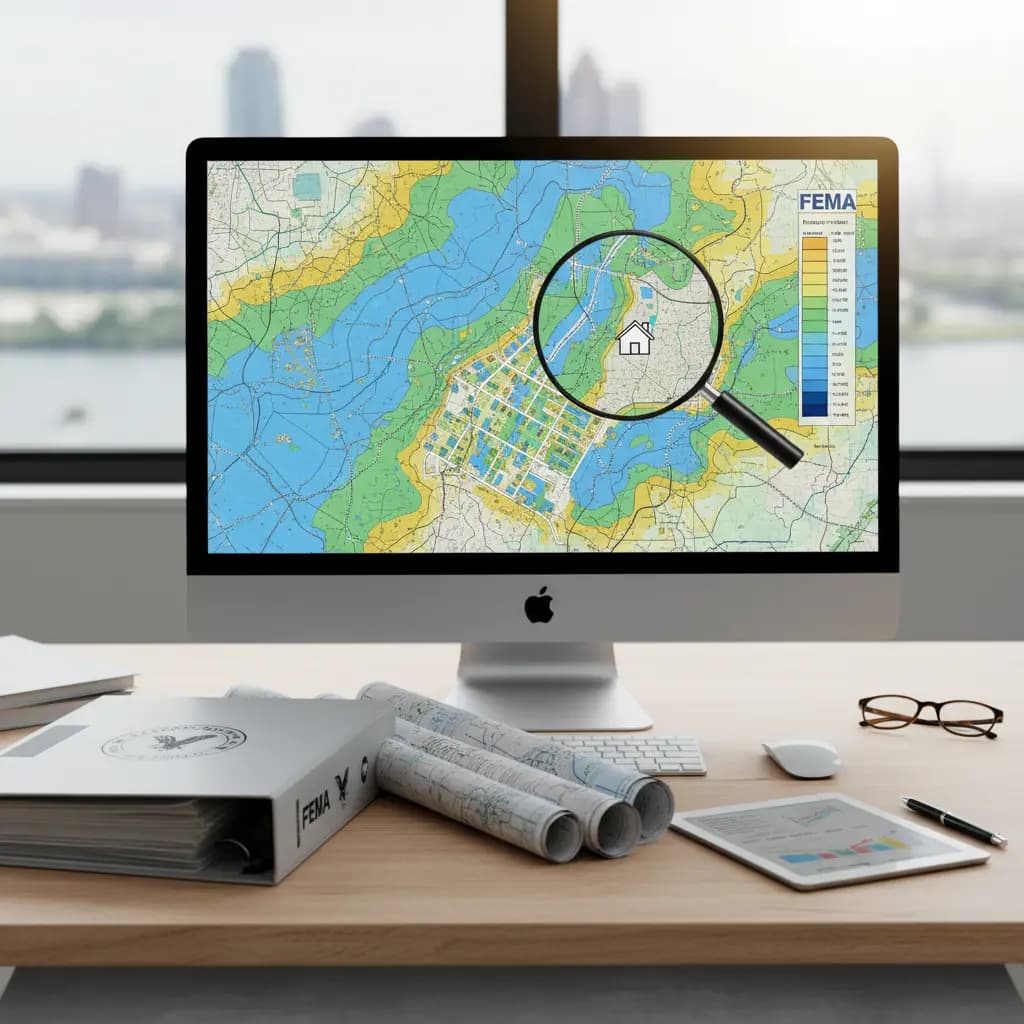
If you are a property owner or considering purchasing one, the FEMA Flood Insurance Rate Map (FIRM) is one of your most valuable resources to understand what flood zone the property is located in. These maps outline your potential flood risk, are used in developing how much flood insurance will cost, and if your mortgage lender will mandate the purchase of flood insurance.
If you understand the FIRM, you can have peace of mind, protect your investment, and avoid unexpected uninsured flood damage. Whether you're shopping for a new property or looking to protect your current property, learning how to read the FEMA FIRM is a good place to start.
What is a Flood Insurance Rate Map (FIRM)?
A FIRM is an official map created by FEMA that shows areas at varying risk for flooding. These maps provide the basis for the National Flood Insurance Program (NFIP) and are utilized by lenders, insurance companies, city planners, and property owners.
Each FIRM has flood zone designations (such as Zone AE, VE, or X), which indicate various levels of flood risk. Past data, hydrologic analyses, rainfall cycles, and topographic surveys determine these. FIRMs also highlight features like:
- Base Flood Elevation (BFE): The height that floodwaters are expected to reach during a 100-year flood.
- Floodways and floodplains
- Special Flood Hazard Areas (SFHAs): Where flood insurance is usually required by lenders
The primary role of the FIRMs is to support floodplain management and compliant construction, provide an indication of potential flood risk that is used to determine flood insurance premiums, and facilitate the mandatory purchase requirement for lenders.
How to Access and Read a Flood Insurance Rate Map (FIRM)
Obtaining a FIRM is simpler than most assume. You can access digital copies via FEMA's Flood Map Service Center. Here’s a step-by-step guide:
- Go to the FEMA Flood Map Service Center at FEMA Flood Map Service Center | Search By Address
- Search by address, city, or coordinates
- Choose the latest available FIRM panel
- View or download the map and legend
- Interpreting Key Zones:
- Zone AE: High-hazard area, with Base Flood Elevations known; flood insurance is generally mandatory if you have a federally insured mortgage
- Zone VE: Coastal zones subject to wave action; most significant risk
- Zone X: Low to moderate hazard; coverage is generally optional, but still advisable
- Zone D: Uncertain risk due to insufficient data
- How to Read the Map Legend
- BFE Lines: Mark the estimated height of floodwater during a base flood event
- Floodways: Transport high-velocity water during a flood; more stringent building codes apply
- Shading & Hatching: Distinctly distinguish between risk zones on maps
Being able to read these specifics makes it easier for you to know what level of flood risk exists for your property.
FEMA Flood Insurance Rate Maps (FIRMs) vs. Other Flood Maps
There are numerous varieties of flood maps available, so what sets the FEMA FIRMs apart?
FIRMs are the federal and local government’s and most lenders' official maps for deciding:
- Whether or not flood insurance is mandatory
- Which properties are located in high-risk areas
- Which properties are subject to floodplain building requirements
Other maps (such as private insurers' or local government maps) might employ predictive models or more recent data. Although those can provide more up-to-date information, they don't substitute for the FIRM when it comes to formal insurance and building code decisions.
Limitations of FEMA Flood Insurance Rate Maps (FIRMs)
Though FEMA's FIRMs are among the most critical tools to determine flood risk, they are not flawless. Knowing their limitations allows property owners, real estate investors, and community planners to make informed decisions and obtain supplementary information when necessary.
- 1. Potentially obsolete in newly developing areas:FIRMs are revised regularly, but the process can be lengthy because of budget limitations, the expense of detailed surveys, and the time required for collecting and validating hydrological data. The maps may not show the most up-to-date landscape or drainage patterns in areas that are growing quickly, where new subdivisions, commercial buildings, or infrastructure projects seem to appear overnight. This can result in some high-risk areas going unseen until the next map revision.
- 2. Development may significantly change how floodwater flows:New streets, levees, parking lots, and drainage systems may reduce runoff and redirect the flood path. Because FIRMs are not updated in real time, these developments may not be included in the most recent version of the map.
- 3. Underestimation of flood hazard because of limited historical data:FEMA FIRMs rely mainly on statistical models that utilize historical records of floods and hydrological projections to determine base flood zones. However, these models are usually trained on data from only a few years in the past, so they can't predict the likelihood of rare but terrible events, how climate patterns will change, or how often extreme weather will happen. This means that properties outside of high-risk zones (such as Zone X) may still suffer from extensive flooding not anticipated by the FIRMs.
- 4.No assurance that there won’t be flooding:Of perhaps most importance is the fact that being outside of a delineated high-risk area does not equate to "no risk," but rather that the statistical probability of flooding is less. FEMA indicates that almost 30% of flood insurance claims are on properties outside the Special Flood Hazard Areas (SFHAs).
- 5. Not always inclusive of all flood types:FIRMs are mainly concerned with riverine (inland) and coastal storm surge flooding. They may not cover risks of urban flooding, flash flooding, or overburdened stormwater systems that can happen anywhere within or outside the mapped zone.
Impact of Flood Insurance Rate Maps (FIRMs) on Flood Insurance Premiums
Your FEMA FIRM zone designation plays a role in determining your flood insurance premium. Properties in Zone AE or VE are usually required to carry coverage if the mortgage is federally backed. Because these areas are considered high-risk, premiums are generally higher. Some key factors that influence premiums are:
- Zone designation (AE, VE, X, etc.) and flood risk potential
- Building Elevations (First floor height or elevation certificate that indicates how elevated your property is above the Base Flood Elevation)
- Foundation type and construction materials
- Building Replacement Cost Value
- Prior flood insurance claims and history of the property
Flood Insurance Rate Maps (FIRMs) and Real Estate/Mortgage Requirements
If you're buying or refinancing a home, mortgage lenders will almost always check the FEMA FIRM to determine the flood zone and if flood insurance is required.
When Insurance Is Required:
- You have a federally insured mortgage (FHA, VA, USDA, etc.)
- The property is within a Special Flood Hazard Area (SFHA), such as Zone AE or VE
For Buyers and Sellers:
- In many states the Realtor or Seller may be required to disclose if a house is located in a high-risk flood area, and if there has been any prior flood damage
- Buyers can use FIRMs to make educated decisions and prepare for insurance charges
Even if you’re in Zone X, where insurance isn’t mandated, it’s still strongly encouraged. Flooding can happen anywhere, and most homeowners' insurance doesn’t cover flood loss.
Importance of Staying Updated on Flood Insurance Rate Map (FIRM) Changes
FIRMs are updated periodically. Communities that undergo development, infrastructure changes, construction, or experience from recent flood events may trigger map revisions.
Why it matters:
- Your property could be designated into a higher-risk area, making flood insurance mandatory
- You can purchase flood insurance at the lower-risk which will allow you to take advantage of lower premiums to start and be eligible for
Check your FEMA FIRM status annually, mainly if new construction or weather patterns are affecting your area.
FAQs
1). Is flood insurance federally required for all properties?
2). Will I need to own flood insurance if my property is located in Zone X?
3). Can a lender mandate flood insurance?
4). Why is flood insurance suggested even in low-risk areas?
5). How often do they change the FEMA Flood Insurance Rate Maps (FIRMs)?
6). Is it possible for my flood zone to change over time?
7). Does FEMA’s Flood Insurance Rate Map (FIRM) map show my exact property risk?
8). What is the difference between a Flood Insurance Rate Map (FIRM) and a Flood Hazard Boundary Map (FHBM)?
9). Can I request FEMA to change my flood zone designation?
10). Are FEMA Flood Insurance Rate Maps (FIRMs) the only place to find out about flood risks?
Conclusion
Knowing the FEMA Flood Insurance Rate Map (FIRM) is vital to understanding the flood risk of your property, purchasing and maintaining flood insurance, and your peace of mind. Whether you reside in Zone AE, VE, or even Zone X, your flood zone determines potential flood risk and whether you must have flood insurance, but it doesn’t determine if your property will or won’t flood.
Don't wait too long. Identify what flood zone your property is in, assess your flood risk, and explore your flood insurance options today. Our team of experts at Advantage Flood is here to assist you in making a well-informed choice.