
Is Flood Insurance Required? Complete Guide to Zone AE, Zone VE, Zone X, and Florida Requirements
Don't risk it. Learn why flood insurance for businesses is vital and how business flood insurance protects your assets and income from costly water damage.
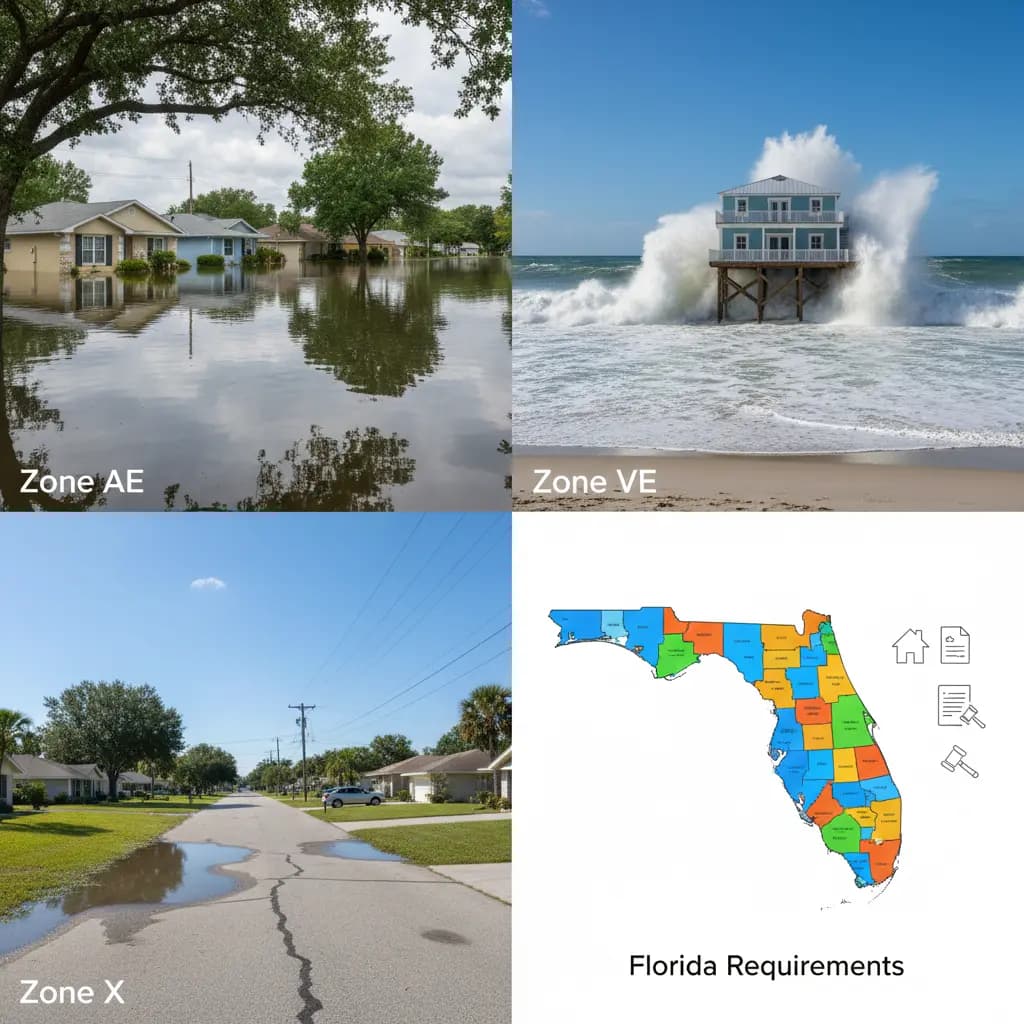
Introduction: Why Understanding Flood Insurance Matters
Flooding can happen anywhere, and it's one of the most common natural disasters in the U.S. Yet, most homeowners' insurance generally doesn’t cover damage from rising water in your home. That’s where flood insurance comes in.
Whether you're buying a home, refinancing a mortgage, or simply reviewing your coverage, a question that would naturally occur is “Is flood insurance required?’. It's essential to understand when flood insurance is mandatory, your risk level, and how various flood zones, such as AE, VE and X, impact your requirements. The Federal Emergency Management Agency (FEMA) regulates flood mapping and the National Flood Insurance Program (NFIP), which plays the primary role in establishing these regulations.
Let’s break down the answer to the question “Is flood insurance required?”, as well as address when it is required, how your flood zone impacts that, and what special requirements apply in Florida.
Understanding Flood Insurance Requirements
Although not everyone considers it, flood insurance can be critical, particularly if you have a federally backed mortgage or live in a flood-prone area. In many cases, flood insurance is required by law. That being said, getting flood insurance is often a great idea even when the answer to the question “Is flood insurance required?” may be “No, not strictly mandated by law.”
When Is Flood Insurance Required?
Flood insurance is usually required when:
- Your property is in a high-risk flood zone, officially known as a Special Flood Hazard Area (SFHA). These include FEMA-designated zones like Zone AE, A, V, VE, AH, AO, A99, and A1–A30.
- You have a mortgage from a federally regulated or insured lender. Lenders are required by law to mandate that you have flood insurance for the life of the loan in these high-risk areas.
- You’ve received federal disaster assistance in the past. To qualify for future aid, you may need to carry flood insurance going forward.
- Florida’s Citizens Property Insurance Corporation mandate for residential properties to have flood insurance coverage
If any of those apply, flood insurance is something you’ll need to comply with federal, lender, and Florida’s Citizens requirements.
What Role Does FEMA Play?
The Federal Emergency Management Agency (FEMA) determines flood-risk areas nationwide. It does so through Flood Insurance Rate Maps (FIRMs), which define risk levels for any given community. The maps establish whether your property is in a high-, moderate-, or low-risk flood area. These maps also include the Base Flood Elevation (BFE), which is the elevation to which floodwaters will rise during a 1% annual occurrence flood (also referred to as the 100-year flood).
The flood zone and BFE are significant considerations in how much you will pay for insurance and can also influence building codes in your neighborhood.
What About the NFIP?
The National Flood Insurance Program (NFIP) is the most common source of flood coverage in the U.S., backed by FEMA and administered through participating insurance carriers. Homeowners, renters, and businesses in participating communities can purchase NFIP policies, which provides up to $250,000 of building coverage for homes and $100,000 for contents. Higher limits are available for business risks.
That being said, private flood insurance is also available in many areas and may offer higher limits or broader coverage. To find the option that best suits your needs, it's a good idea to weigh your options and consult a flood insurance expert like Advantage Flood.
Do Flood Zones AE and VE Require Flood Insurance?
Yes, flood insurance is typically required in Zones AE and VE. Zones AE and VE are high-risk areas as defined by FEMA. They have a 1% annual chance of flooding (also known as the 100-year flood), with Zone VE subject to wave action and storm surge. If your home lies in Zones AE or VE and you have a federally backed mortgage, your lender will usually mandate flood insurance.
What You Need to Know About Zones AE and VE:
- Designated as a high-risk Special Flood Hazard Areas
- Subject to base flood elevation (BFE) mapping
- Elevation Certificates may be required to determine premium pricing
Insurance Cost Implications: Premiums in Zones AE and VE are usually higher due to increased flood risk. However, steps like elevating your home or mechanicals, installing flood vents, or securing an updated Elevation Certificate may help reduce costs.
Having flood insurance protects your financial investment and helps avoid thousands of dollars out of pocket in the event of a flood.
Does Flood Zone X Require Flood Insurance?
No, flood insurance is not typically required in Zone X, but it is highly advised. Zone X consists of moderate to low-risk areas. Since it is not a Special Flood Hazard Area, lenders do not usually mandate flood insurance. But FEMA data indicates that almost 30% of flooding claims originate in properties outside of high-risk areas.
What You Should Know About Zone X:
- Typically low to moderate hazard
- Not subject to mandatory flood insurance regulations (except if the lender requires it)
- Premiums are often lower than AE or VE zones
Why Purchase Flood Insurance in Zone X?
Flooding is unpredictable everywhere. Unexpected damage caused by a sudden storm, a backed-up drainage system, or an overburdened riverbank can surprise you. For peace of mind and financial security, getting voluntary flood insurance in Zone X is usually the better choice.
Is Flood Insurance Required in Florida?
Florida is sitting right at the top of the list when it comes to flood risk. With thousands of miles of coastline, low-lying land, and a hurricane season spanning from June through November, it's no surprise that flooding is a genuine and recurring concern here
But is flood insurance required in Florida? In December 2022 the Florida legislature approved a mandate for residential properties insured through Citizens Property Insurance Corporation to have flood insurance coverage. The requirement to secure and maintain flood coverage for Personal Lines residential policies is being phased in for all policyholders over a four year period that started for new policies on April 1, 2023, with all policies subject to the mandate by January 1, 2027. Details can be found at: Flood Insurance Coverage Rules Kick In for Citizens - Public - Citizens Property Insurance Corporation.
Florida-Specific Requirements You Should Know
Here are a few scenarios where flood insurance may be required in Florida:
- You have a federally backed mortgage and your property is in a Special Flood Hazard Area (SFHA) like Zones AE, AH, AO, A99, VE, or V1–V30.
- You have a Citizens residential property insurance policy.
- Your homeowners’ association (HOA) or condo board may require flood coverage, especially for properties in shared buildings or areas prone to flooding. Many HOAs include it as part of their bylaws to protect the entire structure and common areas.
And don’t forget, Florida is a participating state in FEMA’s National Flood Insurance Program (NFIP). That means NFIP coverage is available to property owners, renters, and businesses across the state, whether you're in a high-risk zone or not.
Who Should Strongly Consider Flood Insurance in Florida?
Even if you’re not officially required to have flood insurance, that doesn’t mean you’re not at risk. Flooding can happen anywhere, especially in a state like Florida, where rainstorms can dump inches of water in minutes, and tropical systems can push storm surge far inland.
If you fall into any of these categories, flood insurance is a smart move:
- Coastal homeowners: Storm surge and rising tides can cause devastating damage even outside of major hurricanes.
- Condo owners and HOA communities: Whether you live on the first floor or manage a shared building, protecting the structure with flood insurance offers financial peace of mind.
- Renters in ground-floor units: If you're renting and your personal belongings are on the lowest level of the building, a renter’s flood policy can help replace what you lose.
- Business owners in flood-prone areas: Commercial properties can face extended closures and costly repairs after a flood. A policy helps you recover faster and reduce out-of-pocket expenses.
Why Is Flood Insurance Worth It
In Florida, flood risk doesn’t follow the lines on a map. Even homes outside the high-risk zones can and do flood, especially after hurricanes, stalled thunderstorms, or overwhelmed drainage systems. FEMA data shows that almost 30% of flood claims come from outside SFHAs.
And here’s the good news: if you’re in a moderate to low-risk zone like Zone X, your flood insurance premium is usually much lower. That means you can still protect your property without breaking the bank, and avoid paying thousands of dollars out of pocket after a single event.
Penalties and Consequences of Skipping Flood Insurance
Opting out of flood insurance when it’s required can have serious consequences:
- Mortgage problems: Your lender can force-place a flood policy at a significantly higher premium that would be added to your mortgage costs.
- Disaster relief caps: Federal assistance after flooding frequently takes the form of a loan, not a grant, which must be paid back along with any other mortgage on the property.
- Florida’s Citizens Property Insurance Corporation: Ineligible for residential property insurance, putting your property at even greater financial risk.
- Out-of-pocket expenses: You may have to pay thousands of dollars out of pocket to repair or replace uninsured damage from flooding.
Protect your property now, rather than waiting until it’s too late.
Tips for Getting Flood Insurance
If you find that you need or want flood insurance, here’s how to get started:
- Request a quote from both NFIP and private flood insurers.
- Work with a flood insurance expert who understands flood zones and how best to help you protect your property.
- Get an Elevation Certificate to potentially lower your premium.
- Buy early: NFIP policies have a 30-day waiting period, so don’t delay.
Your flood zone, and lender or Citizens requirements play a significant role in coverage options and pricing, so professional guidance is key.
FAQs
1). Is flood insurance federally required for all properties?
2). Do I need flood insurance in Zone X?
3). Why is flood insurance recommended even in moderate to low-risk areas?
Need help figuring out your flood risk or getting covered? Reach out to Advantage Flood for expert help and personalized flood insurance quotes that protect what matters most.
Conclusion: Know Your Risk, Protect Your Investment
So, is flood insurance required? The short answer is: it depends.
If you reside in Zones AE or VE, possess a federally insured mortgage, you will be required by your lender to have flood coverage. No matter what zone you reside in, if you have a Florida’s Citizens residential property policy on your home you are required to have flood coverage. Even if you're in Zone X, and not subject to Florida’s Citizens requirement, voluntary coverage is something to consider for the protection of your peace of mind and financial future.
All properties are in a flood zone. And although some locations are more at risk than others, no location is entirely out of harm's way from the threat of flooding. Look up your flood zone today at FEMA’s Flood Map Service Center (FEMA Flood Map Service Center | Search By Address) and speak to a flood insurance expert. Don't wait until it's too late.