
RCV vs ACV Flood Insurance: Understanding Flood Insurance Replacement Cost in Claims
Understand rcv vs acv flood insurance and how flood insurance replacement cost works so you can make smarter, clearer decisions during claims.
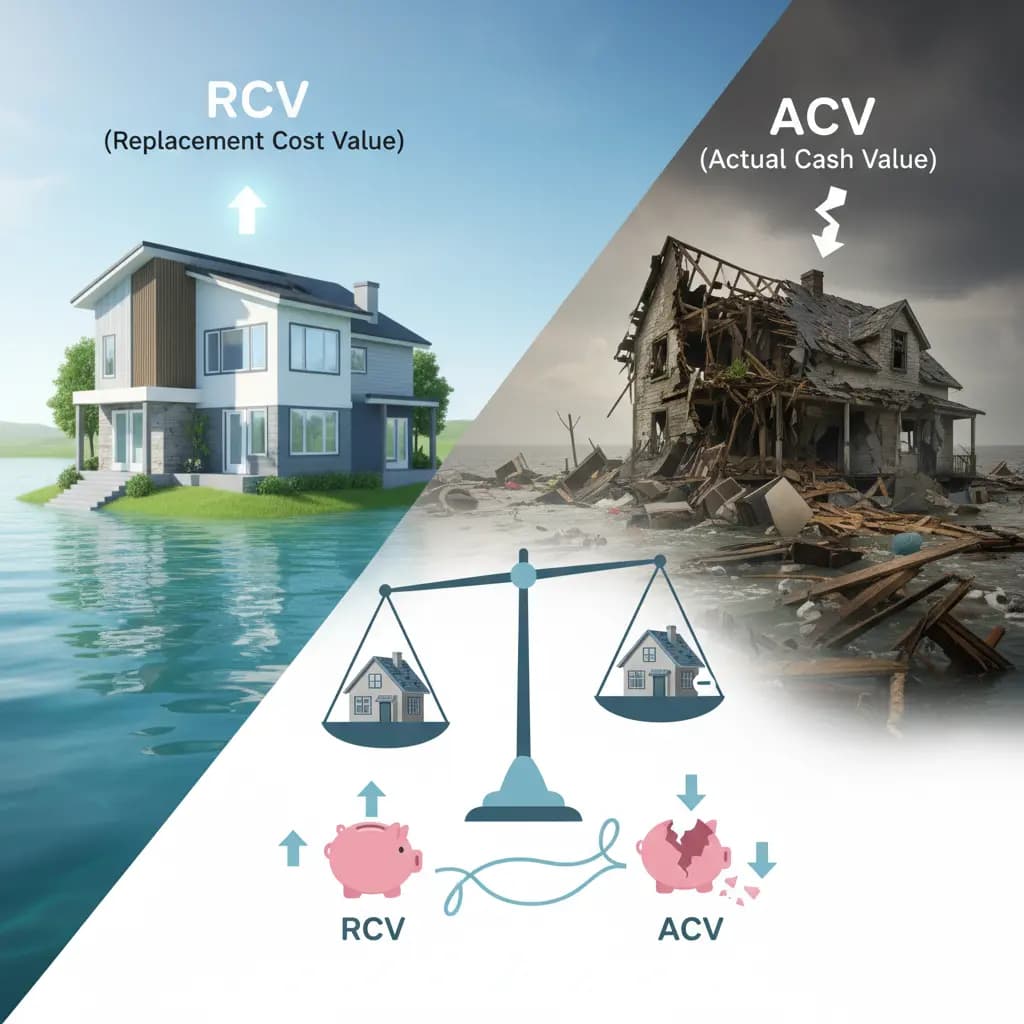
Flooding can strike quickly and severely. Whether you're a homeowner or a renter, understanding how your flood insurance replacement cost works can be the difference between a complete recovery and unexpected expenses. In this tutorial, we'll look at the key differences between replacement cost value (RCV) vs actual cost value (ACV) when it comes to flood insurance, help you pick which is best for you, and explain how to ensure your protection across the US.
Why Flood Insurance Replacement Cost Matters
When floodwaters rise, they often cause widespread damage: soaked walls, ruined flooring, and destroyed appliances. In such cases, your insurance payout depends not just on whether you have coverage, but on how your policy values your losses. If you have flood insurance with replacement cost coverage, your insurer will cover the expense to repair or replace damaged items or structures at today’s prices, without deducting for age. That means if new carpeting costs $3,000 today, you’ll have the full amount needed, even if your old carpet was 10 years old.
In contrast, an Actual Cash Value policy subtracts depreciation from the payout, considerably reducing the compensation. Early awareness of RCV vs ACV flood insurance can help you avoid difficulties later on.
What Exactly Is Flood Insurance Replacement Cost?
“Replacement cost” refers to the insurer's payment of the expense to repair or replace damaged property with similar materials or replacement, without considering depreciation. If a storm floods your living room, this type of coverage ensures that you can restore everything to its original condition.
This coverage is essential because flood-related losses are often total: ruined structural materials, destroyed personal belongings, and widespread damage to fixtures. With flood insurance replacement cost, you're not guessing at future repair budgets; you're covered for the full cost of restoration.
RCV vs ACV Flood Insurance: A Deeper Look
Let’s clear up the difference between RCV and ACV:
- RCV (Replacement Cost Value): Pays the full current cost to repair or replace the damaged structure or contents, even if they’re older or worn.
- ACV (Actual Cash Value):Pays what the item is worth at the time of the damage after accounting for depreciation.
- Melting snow and atmospheric rivers: In the Pacific Northwest, long, narrow bands of moisture known as atmospheric rivers combine with melting snow from higher elevations to create hazardous flood conditions.
Imagine a 7-year-old air conditioner destroyed by floodwaters. RCV coverage reimburses enough to purchase a new unit. ACV may only pay a fraction (leaving you to cover the rest). That’s why reconsidering RCV vs ACV flood insurance is more than just a coverage choice; it’s about ensuring your financial resilience when disaster strikes.
Why the Difference is Significant
Here’s a real-world perspective: let’s say your kitchen flooring and cabinets are destroyed. With flood insurance replacement cost, your policy covers complete replacement, similar materials, or repairing to the same standard. With ACV, you get only the depreciated value. When flooring is older or materials have appreciated in price, the ACV payout may be far below what’s needed to rebuild correctly. That gap is often thousands of dollars, leaving you responsible for extra damage repair or settling for lower-quality fixes.
Companies backing private flood policies tend to offer better flood insurance replacement cost options, while the NFIP often limits reimbursements unless you meet specific criteria. Still, even NFIP-based RCV policies can provide long-term financial protection when accompanied by the correct documentation and upgrades.
When to Choose RCV Flood Insurance
When it comes to flood insurance replacement cost, there are compelling reasons to opt for RCV coverage, even if the upfront premium is higher. Homes with modern upgrades, quality materials, or a long stint of ownership often benefit from full coverage. Similarly, tenants who own high-value items such as electronics, furniture, and apparel can benefit from RCV-rated coverage. It ensures that after a flood, you are not forced to replace necessary items out of pocket.
On the other hand, ACV may be suitable for older properties that require regular minor repairs or for customers seeking to save money on premiums. ACV may provide appropriate coverage for individuals who own simple or temporary dwellings with lower replacement costs; however, there remains a risk of being underinsured in the event of a disaster.
How to Confirm You Have Flood Insurance Replacement Cost
Here’s what you can do to make sure your policy reflects your preferred coverage:
- Read your policy (look for “replacement cost coverage” in the policy form).
- Ask your agent directly about RCV vs. ACV flood insurance and their specific handling of structure and contents coverage.
- Compare quotes from the NFIP and private insurers to assess the full cost of flood insurance, including replacement cost coverage.
- Review your yearly progress, especially if you've made improvements or your property value has increased.
Documentation matters. If your policy promises replacement cost, gather receipts, installation records, and photos to support future claims.
RCV or ACV: Which is Right for You?
For many, choosing between RCV and ACV is about more than money; it’s about certainty. Floods happen suddenly, and families face tough choices about whether they can afford repairs versus having a policy that fully replaces lost items. If most of your contents are valuable or your home has high-quality finishes, full flood insurance replacement cost gives confidence that you won’t be left struggling.
Yet, ACV may still be suitable for those with limited budgets or lower property investment needs. Just be aware of the trade-offs.
FAQs
1). What is flood insurance replacement cost?
2). How is replacement cost different from actual cash value (ACV)?
3). Does the NFIP offer flood insurance replacement cost?
4). Can I get full replacement cost from private flood insurance?
5). Is it worth paying more for replacement cost coverage?
6). What does it mean to have RCV vs. ACV flood insurance?
7). RCV vs ACV flood insurance, which is better?
8). Do all flood insurance providers offer RCV?
9). Can I switch from ACV to RCV coverage?
10). Why is RCV more expensive than ACV in flood insurance?
Final Thoughts
Understanding RCV vs. ACV flood insurance and securing flood insurance replacement cost coverage isn’t just a technical matter; it’s a thoughtful planning process. While ACV may work for some, RCV offers a reliable safeguard when disasters strike, giving you the full amount needed to restore your property and belongings.
As flooding becomes more frequent and severe, staying proactive is crucial. Review your policy, discuss RCV options with experts, and take action now. After all, your home and your belongings are worth protecting.