
What are the Types of Flood Zones: Are Zones AE and VE Flood Zones?
Learn about the types of flood zones, including AE and VE. Discover what makes a zone a flood zone and answers to is zone AE a flood zone.
Introduction
Most homeowners think about fire alarms, security systems, or regular maintenance when it comes to keeping their homes safe. Flood risk is one threat that people often forget about, though. Flooding can occur anywhere, even in a seemingly safe neighborhood, near the shore, or by a lake. It can cause thousands of dollars in damage.
The Federal Emergency Management Agency (FEMA) has defined flood zones to help property owners, insurers, community officials, realtors, and lenders understand potential flood risk. These zones categorize locations based on their likelihood of flooding. Every property owner should be aware of the different types of flood zones and their meanings.
One of the most talked-about flood zones are Zones AE and VE. You may wonder if Zones AE and VE are high-risk flood zones and, if so, how this designation affects your property, insurance costs, and future development.
What Does Standard Renters' Insurance Cover?
This blog will answer all of your questions. We will discuss the various types of flood zones, explain why Zones AE and VE are significant, and demonstrate how it impacts your real estate and financial decisions. Let's get started.
What Are Flood Zones?
FEMA uses flood zones to categorize and group areas based on their likelihood of flooding. Insurance companies, real estate agents, lenders, and city planners utilize them to inform their decisions regarding risk management and compliance.
FEMA makes these maps by combining:
- Data on past storms and rainfall
- Studies of elevation and topography
- Modeling river flow and storm surge
- Information about urban growth
Flood zones indicate the likelihood of flooding occurring in a given year. These flood zones determine whether flood insurance is needed, how much it costs, and which building rules apply.
Are Zones AE and VE flood zones? The answer is yes, both are considered Special Flood Hazard Area (SFHA), indicating a high flood risk.
Types of Flood Zones Explained
Let’s take a closer look at the significant types of flood zones and what each means for residential property & commercial property owners:
| Flood Zone | Risk Level | Lender Flood Insurance Requirement | Notes |
|---|---|---|---|
| Zone AE (A1–A30) | High | Mandatory | BFE determined; the most common high-risk zone |
| Zone A | High | Mandatory | No detailed BFE available |
| Zone AH | High | Mandatory | Areas with shallow ponding (1–3 feet) |
| Zone AO | High | Mandatory | Areas with sheet flow, shallow flooding |
| Zone A99 | High | Mandatory | Areas with flood protection systems under construction |
| Zone VE (V1–V30) | High | Mandatory | Coastal areas with wave action hazards; BFE determined |
| Zone V | High Coastal | Mandatory | Coastal areas with wave action hazards; no detailed BFE |
| Zone X | Moderate / Low | Optional | Areas outside the 100-year floodplain |
| Zone B, C | Moderate / Low | Optional | Areas with moderate flood risk |
Various events occur in each of these flood zones. The strictest building and insurance regulations apply in high-risk areas, such as Zones AE and VE. That's why it's essential to determine if your property is located in Zone AE or VE; the answer has significant implications.
Are Zones AE and VE Flood Zones? (Yes! And Here’s What It Means)
Let’s address this directly: Are Zones AE and VE flood zones? Yes. These areas are not only flood zones, but are also FEMA's most closely watched high-risk flood zones across many US states.
What is Zone AE?
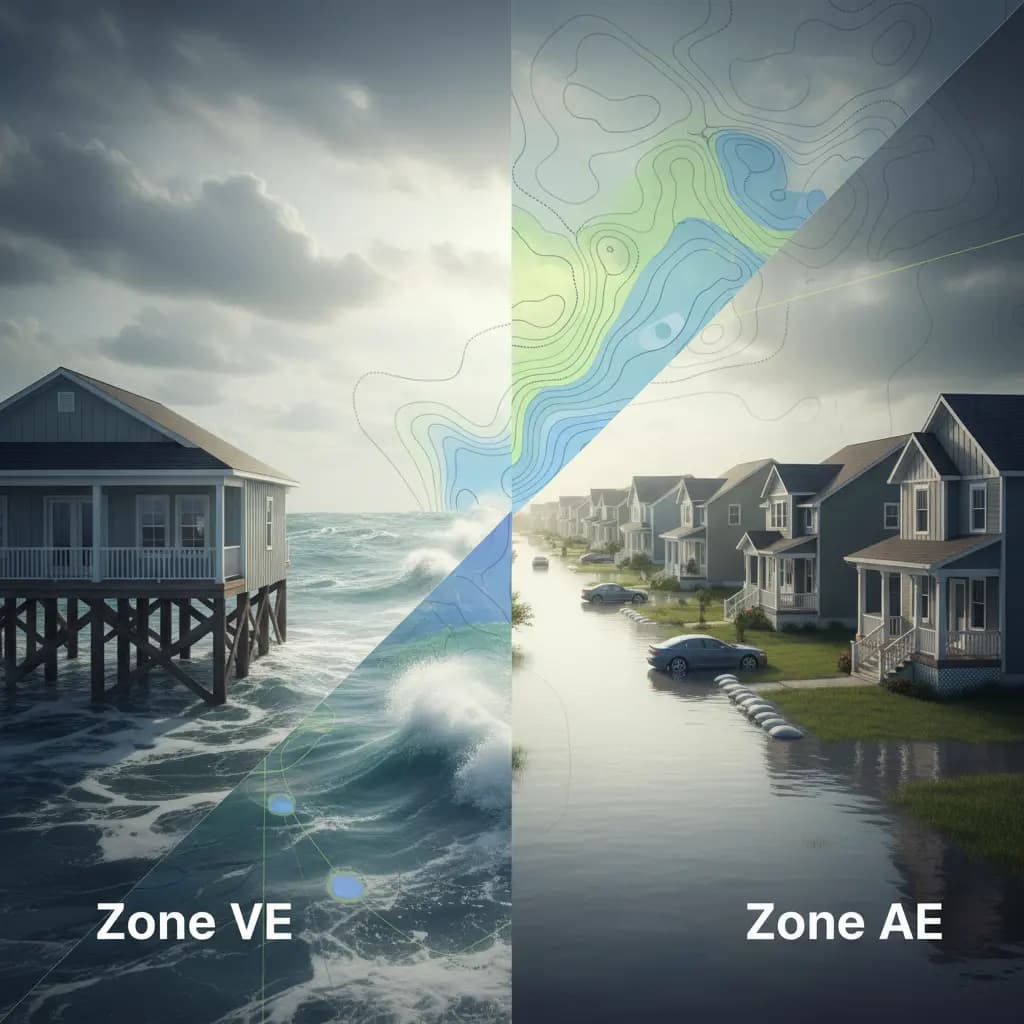
Zone AE includes areas that are located within the 100-year floodplain, where there is a 1% chance of flooding occurring in any given year. The Base Flood Elevation (BFE) is the expected height of floodwaters during a base flood. This makes Zone AE different from other high-risk zones.
Key Characteristics of Zone AE:
- Mapped elevation dataBFE is available.
- Flood insurance is mandatoryfor federally backed mortgages.
- Construction or renovationrequires elevation above BFE.
- Insurance premiums are calculated with precision due to the availability of data.
If you’re wondering, is Zone AE a flood zone that will have higher premiums?—Yes, unless your property has a higher elevation or mitigation steps are in place.
What is Zone VE?
Zone VE includes high-risk coastal areas where there is a 1% chance of flooding occurring in any given year, and that are subject to wave action. The Base Flood Elevation (BFE) is the expected height of floodwaters during a base flood. The impact of wave action makes Zone VE different from other high-risk zones.
Key Characteristics of Zone VE:
- Mapped elevation dataBFE is available.
- Flood insurance is mandatoryfor federally backed mortgages.
- Construction or renovationrequires elevation above BFE.
- Insurance premiums are calculated with precision due to the availability of data.
If you’re wondering, is Zone VE a flood zone that will have higher premiums?—Yes, given the exposure to wave action, although if your property has a higher elevation or mitigation steps are in place premium reductions might be possible.
Real-Life Example: Why Zone AE Matters
Let’s say a homeowner called Jessica owns a home in Zone AE. When applying for a mortgage, her lender informed her that flood insurance is mandatory because her property is located in a high-risk zone. She asked herself, 'Is Zone AE a flood zone that puts me in danger?'
Turns out, yes, but her property is elevated two feet above the BFE, thanks to local regulations. This not only reduced her flood insurance premium but also increased the resale value of her home.
Why Understanding Your Flood Zone is So Important
It matters to know your flood zone for a number of reasons, even if your property is not in Zone AE or VE:
1. Insurance Requirements
Most mortgage lenders will require you to have flood insurance if you live in a high-risk area like Zones AE and VE. Even in areas with a lower risk, it is still smart to have coverage, as FEMA data indicates that over 40% of flood claims come from areas with a lower risk.
Real Estate Value
Buyers want transparency and security. Homes in Zones AE and VE that have mitigation systems in place to protect against flood damage (e.g., raised foundations or flood vents) tend to sell more quickly and at a higher price than unprotected homes.
3. Mortgage Eligibility
Many lenders will not issue a mortgage without flood insurance if your property lies within Zone AE or VE, or other SFHAs.
4. Compliance & Permits
Are you building or remodeling in Zone AE or VE? You must meet safety and elevation requirements; otherwise, your plans may be rejected.
So, again, are Zones AE and VE flood zones that could affect your future as a homeowner? Absolutely! And the sooner you know, the better your decisions will be.
How to Check Your Flood Zone
Want to know what FEMA flood zone your property falls under? Here's how to check:
Step 1: Visit FEMA’s Map Service Center
Go to FEMA Flood Map Service Center | Search By Address and enter your address. You’ll be able to download the flood map, see your BFE, and determine if you’re in a high-risk area.
Step 2: Understand the Map
Look for your zone classification. If it says Zone AE or VE, don’t panic, but take action.
Step 3: Talk to the Experts
Understanding elevation data, flood risk, and insurance coverage can be overwhelming. That’s where Advantage Flood comes in.
How Advantage Flood Can Help
We help you deal with the risk of flooding at Advantage Flood. If you just found out you're in Zone AE or VE, or are looking at flood insurance for different flood zones, we can help:
- Flood zone assessments at no cost
- Risk analysis that is specific to your location and height
- Quotes for flood insurance that are tailored to your needs
- How to lower premiums through mitigation
Should you be worried about being in a flood zone? If you're working with a team that knows the rules and maps, and how to help you navigate both, then no, you don’t need to.
FAQs
1). Is Zone AE a flood zone that only affects coastal areas?
2). Is it possible to take my property out of Zone AE?
3). What is the difference between Zone AE and Zone A?
Conclusion
You should now be able to answer the question, "Are Zones AE and VE flood zones?" Yes, FEMA designates these areas as high-risk flood zones, providing exact elevation data and insurance requirements that must be met. It can change your mortgage requirements, your plans for renovations, and the value of your home.
Our goal at Advantage Flood is to make flood insurance easier. We're here to help you if you're not sure what zone you're in, want to lower your premiums, or want expert advice.
Worried you're in Zone AE or VE? Book your free flood zone review today.